Pages

Total Pageviews

Monday, 29 April 2013

Dark Deeds over Dinner - Novel set in Amsterdam

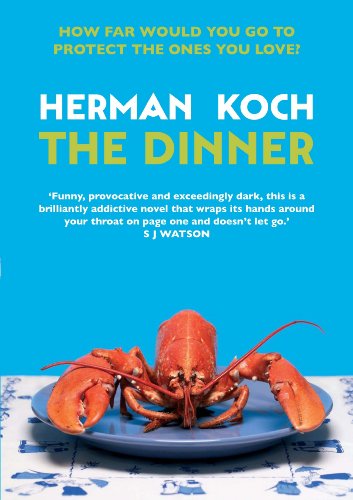
From the world of the Golden Age of Dutch painting we have been inspired to commission a sketch - in the traditional format of Dutch 17th century art but with a modern twist (note the trainers and the lobster) - inspired by the story of The Dinner by Herman Koch, set of course in Amsterdam. We were largely driven for this particular blogpost by our interest in why the cover for The Dinner changed from a lobster on a blue background in the original edition to a pair of adolescent trainers with just a hint of blood, also on a blue background in the current edition.... so we posed the question to Atlantic, the publishers:

“The cover of The Dinner by Herman Koch has changed from a red lobster on a blue background to a pair of battered shoes, again against a blue background in the current edition. Can you take us through the thinking behind the changes?”

Courtesy Artnet.com


"The lobster jacket came from the original Dutch publication which was a huge bestseller in Europe. It is a strong, striking, unusual image that we wanted to use on the first outing for recognition and acknowledgement of the European success. It proved to be quite a ‘marmite’ cover with some people loving its originality and others being put off by a book with an ‘overpriced crustacean’ on the front. And many eagle-eyed readers noticed there was no lobster on the menu…

So after much discussion in house we decided to make the paperback cover more accessible, more pertinent to the story and more serviceable for the ‘literary thriller’ market. The moral dilemma of the story is the element that has got so many people intrigued by this book and the teenage trainers, with a disturbing hint of blood, seemed to sum up the point in the story when everything starts to unravel (not wanting to give anything away!) We also wanted to allow a lot of space in the design for the amazing reviews the book received. You’ll see on the print edition they cover the inside front and back too. Our Art Director showed us some fantastic options, but we felt that this slightly provocative design with it’s notable absence of people, contrast between title and image and strong, almost single colour, would appeal to readers who might have been put off by the lobster, but who relish good books with a dark side. We hope you like it!"
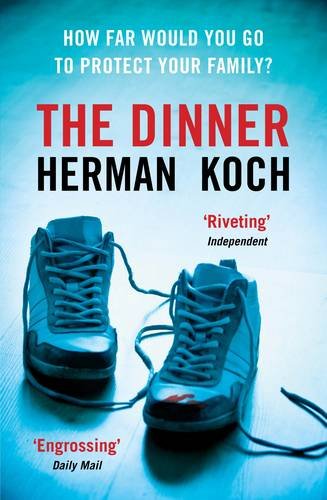

Click on the current cover featuring the trainers to find out more and purchase your own copy. Visit the other contributors
on this tour which marks the publication of this fantastically dark novel by clicking on the following links:

@wordsofmercury  @stujallen


(A piece of interesting info: Herman Koch's surname means "cook" in German...can we read anything into that, I wonder?).

Thank you for visiting today from Tina and the TripFiction Team.


Friday, 26 April 2013

Secrecy and Perfume in Florence and France

Secrecy by Rupert Thomson set in Florence.  Our post can now be found on the new TripFiction website, here


Monday, 22 April 2013

Our Guest Blogger reviews "The Parisian's Return" by Julia Stagg, set in the French Pyrenees


We are pleased to welcome Jacqui Brown as our guest blogger, who is a real authority on the French way of life. She is a wife, Mother, animal lover, and a tries-her-best vegetable grower & home cook, living the French village dream since 2004. She is still in love with France, addicted to reading and reviewing books set in France and sharing her family's adventures on her blog http://www.frenchvillagediaries.com


A perfect French moment
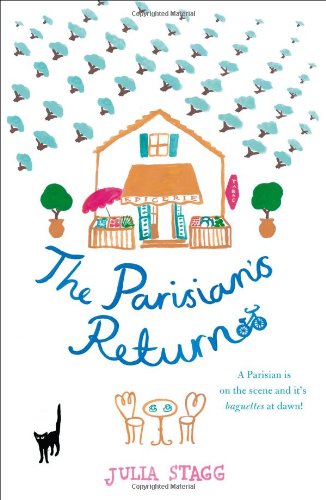
"A great read for me was the second book set in the Pyrenean village of Fogas,The Parisian's Return by Julia Stagg. This book continues on immediately where L'Auberge finishes. I liked that it did this; firstly as all my favourite characters are still there and secondly because there was so much more I wanted to know about life in the village. It is all change in Fogas as the focus shifts off Paul and Lorna (the owners of the auberge) and almost immediately we meet a new character ‘Le Parisian’ and to say things don’t go to plan for him straight away is a bit of an understatement. His presence is not initially welcome, especially as he wants to make changes. Change is often difficult to accept and especially so when it happens in the heart of the village at the bar/epicerie. It takes the locals some getting used to, although little by little he gains their respect. Things are also changing for Stephanie, as she tries to get her new business off the ground, but with the distractions of a bit of love interest and a few mysterious happenings, things don’t go to plan for her either. The other new character makes a much more understated entrance into the village, but is no less integral to the story.
I found there to be a greater sense of community in this book than in the first, with less 'political' bickering (which I know to be a common element in French Village Life). There is a real pulling together, especially at the end when there is drama and a real danger threatens the safety of some of them. French village life may not have the excitement of city life, but there is never a dull moment in Julia's village. I can't wait to get back to Fogas and read book three The French Postmistress is available now. Same village, same characters but someone else's story to be told".


You can follow Jacqui on Twitter @loubille


Thank you to Jacqui for sharing her review on TripFiction. Click here to see all our books set in, and evocative of France and Click on the cover and links to find out more about the individual books. Share with us your all-time favourite reads that evoke France, there are soooo many out there!


Thursday, 18 April 2013

Historical Fiction from Nagasaki to Plymouth

This post can now be found on the new TripFiction website here


The Gilded Fan by Christina Courtenay

Monday, 15 April 2013

Juju*, guilt and so much more in West Africa. Meet the couple behind the travels....

"West Africa  is nobody's idea of a dream holiday destination"

This post + author Q&A is on the new TripFiction website, here


Friday, 12 April 2013

"The Promise" set in Galveston & reviewed for TF by Anne Cater

We invited top book reviewer and blogger Anne Cater to share a guestpost on our blog and are very pleased she accepted our invitation. Anne is based in Gainsborough, Lincolnshire, married, and has two cats Costa and Nero. She has worked extensively in the voluntary sector and is an avid reader, devouring up to 12 books per month. She travels regularly to Greece and in her photo you can see her hard at work (is that Ouzo in that glass?) on one of her visits to Greece. Her favourite Greek resort is a tiny village called Arillas on the North West coast of Corfu and she has also visited Rhodes, Crete, Kos, Paxos, Lefkas, Zante, Kefalonia and Cyprus.

She has also shared her all-time favourite reads with us today and we feature them all at TF, because, not only are they top reads, they also brilliantly evoke location:


To Kill A Mockingbird - Harper Lee (set in Alabama)
A Thousand Splendid Suns - Khaled Hosseini (set in Kabul/Herat)
Chocolat - Joanne Harris (set in France)
The Lollipop Shoes - Joanne Harris (set in Paris)

The Thirteenth Tale - Diane Setterfield (set in England)
The Shadow of the Wind - Carols Ruiz Zafon (set in Barcelona)
The Island - Victoria Hislop (set on Spinalonga, Greece)

The Promise by Ann Weisgarber set in Galveston


I read Ann Weisgarber's first novel The Personal History of Rachel Dupree way back in March 2009 and thought it was really stunning. It went on to be short listed for the Orange Award for New Writers and was on the long list for the Orange Prize UK.

It was with some trepidation that I started to read her second book, The Promise. I wondered how she was going to write something as evocative as her first novel. I started reading The Promise on the train down to London and I finished it during my return journey. I hardly raised my head once as I was sucked into this intensely moving, sometimes very challenging, but wonderfully easy to read story. I felt as though I had been whisked off to Texas in the early 1900s and once, when I glanced out of the train window, I was actually shocked to see the fields covered in snow - this story really does suck the reader in, and very quickly.
Once again Ann Weisgarber has created a story that centres around extremely strong female characters. Catherine Wainwright, who has fled her home-town in the wake of scandal and Nan Ogden; a down-to-earth, honest farm girl who lives on the outskirts of Galveston. When Catherine realises that she can no longer hold her head up in her home town, she orchestrates a marriage proposal from Oscar Williams. Oscar moved out to Galveston to become a dairy farmer and has recently been widowed and left with a four-year-old son Andre, to care for. Nan Ogden promised Oscar's wife that she would care for Andre. Nan and Catherine are as different as chalk and cheese, yet underneath they are both very strong women, and both struggle against the rules of society.

Life in Galveston is hard for Catherine, the town-folk have never met anyone like her. She bewitches the men and the women suspect her. Nan struggles with her feelings for Oscar, her loyalties to his first wife and her feelings that no one will ever love her. They struggle on together, and it is only when a terrible storm hits the small town that they are tested to their limits.
The characters in The Promise are developed so well, they grow with the story - their flaws and their failings are not glossed over, these are real people, drawn beautifully. The sense of place is what stands out the most for me - the heat, the smells, the sights and the sounds of this bleak and desolate part of Texas. The description of the terror and havoc that the storm brings is vivid.
Galveston really did suffer terribly during the storm of 1900, this is an event that I had no knowledge of and have discovered that although this is a fictional story, some of the people and the places really did exist. This storm was far worse than Hurricane Katrina and ripped the heart out of this small community, killing in the region of 6000 people.

I enjoyed every single page of The Promise, I liked it even more than Rachel Dupree. Ann Weisgarber has proved to me that she is an incredibly talented author whose stories are going from strength to strength.

Click on the cover to find out more and to purchase
Anne started her blog http://randomthingsthroughmyletterbox.blogspot.co.uk/ a couple of years ago with the intention of using it as a place where she could remember her favourite books.  It has really snowballed from then and now she gets review requests on a weekly basis, both from authors and publishers. She is part of the Pan Macmillan Readers Group Panel, meeting 4 times per year to discuss newly released books and to put together the Reading Group Guides and Notes for the paperback editions. Follow Anne on Twitter @annecater

Anne will be sharing her top reads set in Greece soon


Wednesday, 3 April 2013

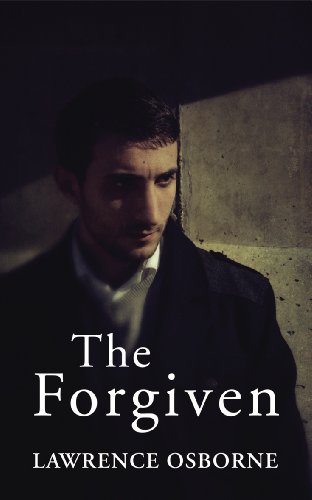
MOROCCO: "Piece by piece the camel enters the couscous" - Review and author interview with Lawrence Osborne


Where to start with this sumptuously descriptive novel dripping with lusciousness and foreboding? The background setting of Morocco is an intrinsic character that fluently comes to life through Lawrence Osborne's writing. Whether it is the landscape, the characters, the ambient temperature, the fossils or the people - both local Moroccans and Westerners whose lifestyles and values pit themselves against each other - everything is bathed in a terracotta hot red, set against the desert and mountains of the country. The food is richly described from the McVitie's crackers slathered with majoun (a mix of kif, dried fruits, nuts and sometimes fig jam) to the couscous "sweetened with sugar and lines of melted cinammon" to "almond breewats" all washed down with Santenay and Tempier Rose.

Jo and David Henniger are motoring down to the ksour, owned by Dally Rogers Margolin and his partner Richard Galloway at Azna, with the prospect of a weekend of hedonism with the rich and powerful from around Europe and America, billed as "the best party East of Marrakech". It is a dark night, the road gives off its accumulated daytime heat, the stark shadows rise up against the mountains. Suddenly, David, with a high level of alcohol in his blood, hits one of two locals, Driss, and kills him on the spot. His companion Ismael heads for the hills as the Hennigers step out of the car to assess the damage.The story expands from there as the cultures of the party people from Europe and America, and the indingenous peoples, the Berbers, weave an unforgiving path. The impact of the tragic incident reverberates into the hedonistic thrum of the party weekend, and forgiveness and revenge vie with each other, as the individuals all respond in their own unique way to events.

The author clearly knows the country really well and the research peppers the pages of the novel. We learn, for example. that fossil mining is a huge industry in the country and each tribe deals in different and specific fossil-types - only the black market dealers cross the lines. For now, though, enough of our eulogies, and over to the author himself for a few words:

TF The book brings the rugged countryside and people of Morocco to life.  A really red burning, hot and brooding sense comes through your writing. You clearly know the country very well, how has that come about? 

LO I began traveling to Morocco many years ago, spending winters alone in a place called Essaouira. It's still place I love and that I go back to. When I was younger I used to like taking buses all over the country, it was a way of being alone for weeks on end during spells of unhappiness. Then, later, I made some trips into the deep desert to collect fossils at Jbel Izzomour and Alnif, places that are far off the road maps, and the solitude came to be of a different order. On one trip I went to Erfoud with a French girlfriend and for weeks we argued and fought during endless sandstorms and, I think, the first seeds of the novel were implanted. 
TF What was you inspiration for the gripping and black storyline of The Forgiven? 

LO It was a story told to me by my then-agent Emma Parry during lunch one day in New York. It was, apparently, true. I changed a few things, of course, and created my own ending and themes....but when I heard it I thought "But I know those places from years ago." I had never written anything about Morocco, not even a travel piece. I never wanted to do any travel writing about it - it meant too much to me. But the story immediately resonated with me. I never hesitated, I started writing it that night. 

     TF You clearly show how two cultures struggle to live side by side – the Westerners bring moral standards that are very different from those of the indigenous people in Morocco. How smoothly do the cultures co-exist in practice?  

      LO I see that the Washington Post has just published a map showing the most and least welcoming countries on earth and Morocco is rated as the third most welcoming. Very well. But there is more to it than that. There is suspicion and distance too and I think two cultures will rarely lie down side by side easily. I live in Thailand, which was also rated high in the Post piece, but Thai attitudes to westerners are not simple either. When you live in a place for a while you see that the apparent harmonies are often just expediencies that can easily decline into paranoia and defensiveness, not to mention exploitation. 

TF Nicholas Lezard describes you as “a master of the high style” when he refers to your book: The Wet and The Dry: A Drinker’s Journey. We very much enjoyed your writing style in The Forgiven. How did you initially come to writing? 

     LO I have been working as a journalist since I was very young and writing non-fiction books, but apart from a novel that was published when I was 27 I would say I came rather late to fiction...there was a long gap but I was struggling with the form all the time, largely unsuccessfully. It doesn't come easily to me. I had to rewrite The Forgiven over a period of several years before it was accepted by anyone. It took so long because I needed to work out my own prose attitude and style dealing with the things I wanted to explore - the relations between men and women, for one thing, and the way landscapes create story and character, the relation between western personality and non-western - a theme that fascinates me. I knew what I wanted to explore, and the simple elegance and suppleness I needed, but I didn't have the means to do it. I am not sure I do have it now, but it seems to be crystallizing. 

     TF What are you working on now?
LO Hogarth have just bought another novel called "The Ballad of a Small Player," about gamblers in the casinos of Macau. It's quite autobiographical, but it's adapted from a Chinese ghost story. I've also just finished a collection of short stories, several of which are being published this year in magazines in the United States. 

A big thank you to Lawrence Osborne for answering our questions. And if you happen to know what "piece by piece the camel enters the couscous" means, do let us know in the Comments Box (oh, and let us know of other terrific novels you have read that are set in Morocco, we'd love to hear from you!) "Ar Tufat" from Tina and the TripFiction Team.


Saturday, 30 March 2013

"Cobblestony old Europe" in Luxembourg (the e-book version)

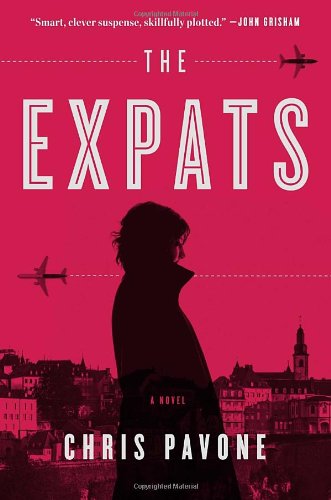
The Expats by Chris Pavone, thriller set in Luxembourg.
This post can now be found on the new TripFiction website here


Time out on Tilos, Greece

This post can now be found on the new TripFiction website here

Falling in Honey by Jennifer Barclay, set on Tilos, Greece


Thursday, 28 March 2013

Coasteering* and loved-up encounters in Pembrokeshire

from skoobyblue.blogspot.com

Caerfai Bay, Pembrokeshire


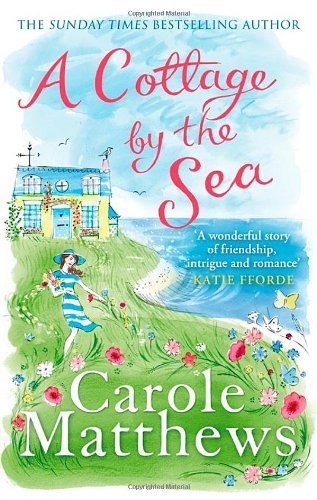
A Cottage by the Sea by Carole Matthews This post now appears on the new TripFiction website here


Sunday, 24 March 2013

Bangkok and on Thailand's Islands

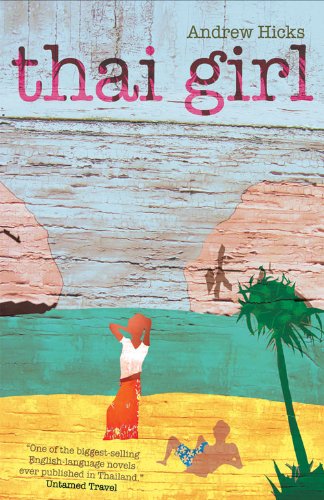
THAI GIRL by Andrew Hicks, set in Bangkok and Thailand's Islands

this post can now be found on the new website here

Sunday, 17 March 2013

Hexham (not Haltwhistle) - the centre of Britain

We have selected two top books to escort you around the highways and byways of Britain "see a location through an author's eyes". Discover Britain!

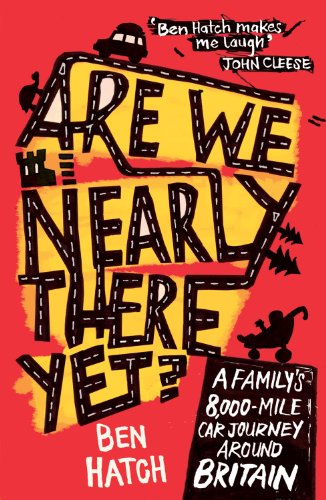
Are We Nearly There Yet by Ben Hatch tells the story of Ben, his wife Dinah and their two pre-school children, Phoebe and Charlie who are commissioned by Frommers (the American equivalent to Time Out) to set out on a 5 month family odyssey, an 8000 mile journey around Britain. Only the foolhardy, surely, would take up the baton and set off from the Brighton area in a westerly direction and then up to the northern sphere, with a boot and roofrack full to bursting with luggage, two tinies in tow... but gamely, they embarked on this trip with aplomb and enthusiasm. In parts a chronicle of hilarious experiences, in part a travelogue that honestly charts the sights worth seeing (and those to be missed), interspersed with enough poo and vomit to keep the whole family (and the readers) down to earth (including an unusual encounter with a toothbrush, which results in a visit to Hexham Hospital). Encounters abound, with the World's Largest Pencil (or possibly not, as it transpires) at the Cumberland Pencil Museum (and Borrowdale graphite was the drawing material of choice of Michelangelo, well, I never....); from negative encounters in the Lake District (this is depressing when it is England's largest and best known national park, and is widely considered the most romantic spot in England - Bill Clinton proposed to Hilary here, as did Sir Paul McCartney to Heather Mills, which, of course, did not end well....); to the Robin Hood Experience (worth a miss, it would seem); to Craster, which at the turn of the 20th century was the UK Kipper Capital, smoking over 25,000 fish per day (the fish were "gutted by Scottish fishwives, who lived in ramshackle buildings called kip houses, suitable only for sleeping in" - hence the saying, to have a kip.

Scotland gets short shrift at just 3 pages and the geography goes a bit haywire at this point.
Daughter Phoebe has a larger than life presence in the book, and in the background is the tragic demise of Ben's Dad.  Relationship officionados will also be able to glean a bit about the couple's marital fit, and observe the interpersonal exchanges that really keep the show on the road! Overall, a gamut of emotions contained in one informative travelogue. In the next print run we would love a map to be included in the book, that charts their, at times, erratic journey!

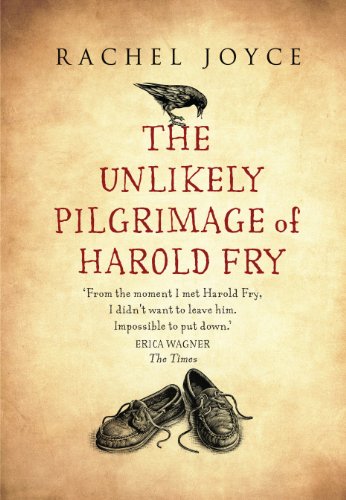
Our second featured book is a work of fiction, and at 87 days and 627 miles it covers considerably less ground. The Unlikely Pilgrimage of Harold Fry by Rachel Joyce. is a gentle meander from Kingsbridge in Dorset to Berwick-upon-Tweed, the northernmost town in England, as Harold Fry finds a fit of passion on his way to post a letter and just continues walking in a northerly direction. Along the way he encounters beautiful English countryside, which is dreamily described and will just transport you to this green and pleasant land: Trees and flowers seemed to explode with colour and scent. The trembling branches of the horse chestnut balanced new candle spires of blossom. Rambling roses shot up garden walls, and the first of the deep red-peonies opened like tissue-paper creations. The apple trees began to shake off their blossom, and bore  beads of fruit; bluebells spread thick like water through the woodlands. The dandelions were already fluffheads of seed  all kinds of weather is thrown at him, from blistering sun to rain that drove at him in thick pins... (isn't that just a lyrical description of England at its best?).

This is a slow story of love and loss and love regained, Harold's aim to see his old friend and work colleague Queenie before she dies of cancer.  He shows unplumbed depths of determination as he ploughs on, accumulating a coterie of people who want to latch on to his journey, in the hope that his inspired walk will rub off  them and they too can take ownership of his "pilgrimage". Towards the end he diverts briefly to Hexham, to try and catch up with someone he met earlier on his walk.

A gentle and meditative novel, that entices you to keep up with our hero, tand to share his trials and tribulations as the miles pass by. Bit by bit the shared history that he,and his wife Maureen have long grappled with begins to take shape. A languorous read that will transport you to a ruminative place, but will frustrate readers who like a fast-paced book.


Sunday, 10 March 2013

"Paris at my feet" (from Les Misérables)

The Novel:
Anna Trent (pronounced Tron in French) suffers an accident in a chocolate factory in England where she works. She loses a couple of toes and in order to get back on her feet, her erstwhile French teacher Claire - who herself is extremely poorly -  suggests she takes some time to get herself together and work for Thierry, master chocolatier, and also Claire's amour from younger days. Paris  certainly calls....
Anna settles into a tiny apartment high above the rooflines of Paris, which she shares with Sami, an operatic costumier who brings a sense of exoticism to the story (as though diving in and out of chocolate making and eating delicious food isn't enough!). The story deftly weaves its way through the quartiers of Paris, as love and care blossom and we follow Anna as she experiences an "EXTREMELY foreign experience".

Paris, the City:
Come, follow us to Paris via this  beautiful tale of romance, heartache and chocolate:

"Friday afternoon in early July on the Ile de la Cité was hot and sticky and bustling with tourists. Away from the formal 'placement' of the organised streets and wide boulevards, the far corner betrayed its twisty, hugger mugger mediaeval origins; little alleyways springing hither and thither; roads narrowing to nearly nothing or ending abruptly at the wall of one of the great churches." Tempted to visit....?

Author Interview:
To mark the publication of this fabulous new book, TripFiction poses some questions to author Jenny Colgan

TF - You warmly evoke Paris in your new novel – so much so that we are left yearning to visit again. How have you come to know the city so well? 

JC - My brother moved there when he was in his early twenties and lived there for a long time so I used to hop across all the time. Now I have two friends who spend a lot of time there and I love going to see them from Antibes, where I live. It's a beautiful trip on the TGV. 

TF - You describe how Laurent and Anna set off down a tiny maze of alleys, heading for a restaurant that only has a mushroom over the door to indicate an eating establishment; it is somewhere only Paris insiders would know about. Does this restaurant exist and how did you discover it? 

JC - It certainly does, and it's amazing- we were taken there by friends, I can't even remember where it is. We ate nine mushroom based courses. Extraordinary place. 

TF - You share so much wonderful information about the production of chocolate. Where did you learn about the process? 

JC - Haha, thank you but very boring research I'm afraid; books and the internet. Alas, I never got to go to a factory! 

TF - The story is in part romance, but it also has a much darker edge it to it. What was your inspiration for the storyline? 

JC - Well, I really did it backwards - what would make Anna go? It's so hard to throw up your whole life and change everything, really difficult. So I thought someone must have inspired her to go and Claire's story came out of that really: when I started the book I didn't envisage Claire having such a large role. 

TF - How did you choose the names for your characters? 

JC - With enormous difficulty. Every writer will say this, it's a great question. You want names that tell you a bit about a character but not too much. I chose Claire because it sounds the same in both English and French. Finding a boy's name was quite difficult because a lot of the male names I really like in french sound a bit feminine to english ears- Clément, Florian, Baptiste. So we experimented with a few and settled on Laurent. Anna started off with another name, I can't remember what it was now. Actually funny story: my daughter is called Delphine and when I told my writer friends two of them went 'oh, really?" So this year both Jill Mansell and Maggie O' Farrell have books coming out with Delphines in them. I'm really pleased! 
A huge thank you to Jenny for answering our questions.


Tuesday, 5 March 2013

Museums & Fiction in MEXICO CITY

We are so pleased that author Carmen Amato has kindly agreed to guest blog her selection of fiction set in and around the Museums in Mexico City……
There you are, strolling through amazing exhibits and you know something’s missing. Like the backstory. Wish you'd known more before going? But there wasn't time. Besides,  researching before going to a museum sounds too much like work. 
So prep with a little fiction! Have fun and get the backstory before you go by matching a good book with a counterpart museum. It’s like pairing white wine with fish or a cabernet with a good steak; each tastes better with the other. 


Here are some suggestions for pairing fiction books with museums in Mexico City. Just like Corona with carnitas! (Click on the covers for more information).
Chapultepec Castle and The Last Prince of the Mexican Empire by C.M. Mayo
The museum: Perched on top of a hill, with sweeping views over Mexico City’s western sprawl, the fortress-style castle was home to the ill-fated Emperor Maxmillian I and his empress, Carlota, during the Second Mexican Empire from 1864 to 1867. You can walk through the rooms, which are arranged shotgun fashion--each leading into the other--insuring that no one at the court had much privacy. The gilded, delicate French-style furniture is an indication just how out of touch the royal court was from real life in Mexico. Take the trolley from street level up the hill, otherwise you’ll be too exhausted from the climb to appreciate the museum.
The book: The Last Prince of the Mexican Empire by C.M. Mayo is a fictionalized account of the Second Mexican Empire seen mostly through the eyes of the American woman whose son was adopted (or seized depending on your point of view) by the childless Maxmillian and Carlota in the vain attempt to establish an heir to the Mexican throne. The book is a real gem and shows off both amazingly detailed research into the life and times of the Second Mexican Empire and the author’s ability to create wholly believable historical characters.
The Palacio Nacional and The Eagle’s Throne by Carlos Fuentes
The museum: This long, stately building rises impressively along one side of Mexico City’s enormous Zócalo central square. It is a working government building but visitors flock there to see the famous murals by Diego Rivera that adorn the main stairwell and the walls of the second floor. Grandly titled "The Epic of the Mexican People," the murals were painted between 1929 and 1935 and tell Mexico’s story from the Aztecs to the worker of Rivera’s times. Above the building’s central doorway, facing the Zócalo, is the main balcony where just before 11:00 pm every 15 September, the president of Mexico gives el Grito de Dolores, the infamous cry for independence from Spain originally made by national hero Miguel Hidalgo. Hidalgo’s church bell from the church of Dolores Hidalgo, Guanajuato, hangs above the balcony. 
The book: The Eagle's Throne by Carlos Fuentes - The murals and the el grito commemoration are integral parts of Mexio’s turbulent and at times visceral political rivalries and history. The Eagle’s Throne, written as a series of letters by a tangled net of political players, is a masterfully crafted inside look at that political game. The letters reveal the story bit by tantalizing bit, with allegiances, conflicts, brinkmanship, and manipulation driving the narrative. An amazingly complex and skillful book, there is nothing else that so perfectly takes the reader inside Mexico’s political world. It is a winner of the Cervantes Prize as well.
La Casa Azul (Frida Kahlo’s house) and The Lacuna by Barbara Kingsolver
The museum: This cobalt blue house in the artsy Coyoacán suburb of Mexico City was the family home to iconic painter Frida Kahlo and where muralist Diego Rivera also lived during his stormy marriage to her. Kahlo and Rivera were socialist sympathizers and la Casa Azul was an intermittant refuge for Leon Trotsky 1937-39 when he fled Stalin’s Russia. The house contains numerous Kahlo artifacts and pieces of artwork. An outdoor room built by Rivera and encrusted with shells shows just how unrestricted the two were in their creativity.  
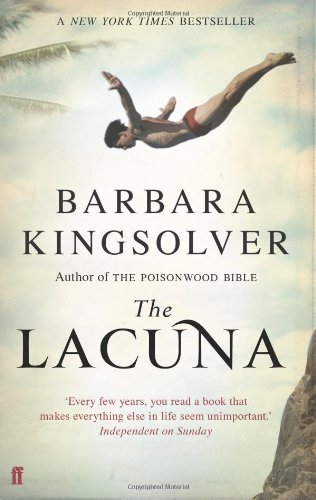
The book: The Lacuna traces the life of a troubled young American man who was raised (by a free spirit mother) in Mexico City and becomes assistant, chef, and secretary to Kahlo and Rivera. Rich in imagery, poetic prose, and character development, we see the conflict and intimate life of the two artists through his own troubled eyes. Their commitment to Trotsky and his time in Mexico City is the real centerpiece of the book. I didn’t love the end, but the novel is a dense, lavish telling of the story of Kahlo and Rivera—and all that had happened in that house.
The Tamayo Museum and The Hidden Light of Mexico City by Carmen Amato
The museum: The Tamayo is the queen of contemporary art in Mexico, drawing in A-list international artists and fearlessly promoting new ideas and installations in the art world. A huge curved sign occupies prime real estate on Paseo de la Reforma, Mexico City’s main drag, advertising the ever-changing array of exhibits. The building is a piece of glass sculpture, a nice contrast to its neighbor, the more stolid Anthropology Museum. Well curated, it is rarely crowded and always gives fresh perspectives. Also, the small restaurant has very good coffee. 
The book: In The Hidden Light of Mexico City by Carmen Amato anti-corruption attorney Eddo Cortez Castillo talks to housemaid Luz de Maria Alba Mora in front of the museum and mistakes her for an art teacher. Their tour of the museum brings the reader right along, showing the variety of things one is likely to see in the Tamayo, from video installations, to 3-D objects of startling variety and materials, to classics like actual paint on canvas. Like it does to everybody, the Tamayo startled Eddo and Luz but also hugely entertained, leading to an unforgettable conversation about life, history, and love. Of course more happens after that—Eddo’s hunting a corrupt Minister of Public Security and an elusive cartel leader while Luz’s family implodes—but you’ll have to read the book to see how it all works out in an ending that takes on Mexican government corruption as well as the country’s rigid social system.
Carmen Amato is the author of political thriller THE HIDDEN LIGHT OF MEXICO CITY and the EMILIA CRUZ mystery series set in Acapulco. Both draw on her experiences living in Mexico and Central America. Her blog series GIRL MEETS PARIS captured her adventures while a student in the City of Light. She currently divides her time between the United States and Central America. 
Visit her website at carmenamato.net where she blogs about the elements of motive and offers a book club that travels the world two books at a time. Follow her on Twitter @CarmenConnects.
This is an update of an article previously posted on camrenamato.net.


Friday, 1 March 2013

A brush with China under Manchu rule

At TF we came across Peirene Press very early in our researches - they specialise in contemporary European literature, that is thought provoking, well designed and short. They have a perfect strapline from the TLS which absolutely sums up the books they produce:  "Two-hour books to be devoured in a single sitting: literary cinema for those fatigued by film". Click on the cover to see reviews and to find our more!

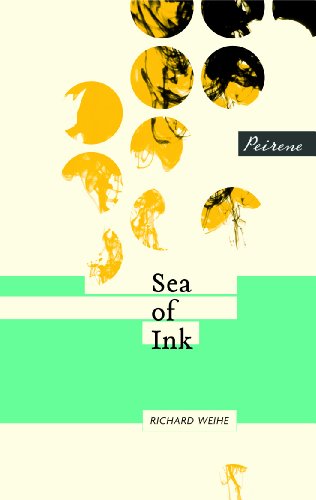
We feature the Sea of Ink by Richard Weihe which spans much of the 17th century in China. It follows the life of  Zhu Da, a descendant of the Ming Dynasty, who has the tremendous gift of producing beautiful pieces of artwork. His scholarship progresses, as his character morphs and adapts to the new regime of the Manchus, through Buddhism studies to feigned madness, in an attempt to can keep his integrity as an artist and continue his quest to capture the essence of nature with a single brushstroke. The book is a thought-provoking study of scholarship and persona, and is beautifully translated from the German original.

The Sea of Ink in the title refers to the highest category of scholarship that could be attained. The book has a scattering  of delicate and contemplative picture postcard vignettes of the work of Shu Da, who by the ends calls himself Bada Shanren (the name under which he is remembered and his work classified). The prose is delicate and contemplative and his artwork simple in nature and beautifully composed. A dream of a novella for those interested in art and this period of Chinese history.

Click here to see more of our featured fiction set in, and evocative of China. Please add any books set in China that you have liked and have evoked the country.


 We have a rolling selection of books that we can send to you for review. If you are interested, click on the blogpost on the right hand side bar "Review Copies for Readers" to see the books currently available for review.


Sunday, 24 February 2013

County Mayo to New York City

"The sky was blue-grey, with pencils of peach light framing the tall buildings" 
Welcome to New York City


This post now appears here


Sunday, 17 February 2013

Novels set in Bookstores

During our researches for the TripFiction site, we have come across innumerable books that are set in bookshops around the globe. A quirky compilation, one that hones in on cultural differences, with books and bookstores as the central theme. We have really enjoyed creating this small list -. and please add your favourite "novels set in bookstores" below!

Our collated novels set in bookstores can now be found on our Pinterest board here


Sunday, 10 February 2013

Foodie fiction set in Zurich and Amsterdam


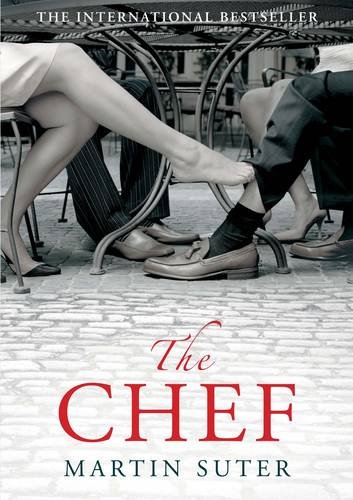
The Chef by Martin Suter
set in Zurich/St Moritz 

This is an interesting book that crossed our path recently, a kind of large novella. Maravan is living in Zurich, having left his homeland of Sri Lanka, though he can never quite sever himself from his roots and particularly from Great Aunt Nangay who inspired him to cook. Meeting up with Andrea, a waitress working at the renowned restaurant Chez Huwyler,  where he too worked for a time, they form a plan to provide sumptuous Ayurvedic meals for couples who need to stimulate their sex life. ("Ayurveda is a type of medicine which is many thousands of years old. It has eight disciplines. The eighth is called Vajikarana. It's all about aphrodisiacs. This includes certain food dishes").They encounter arms traders and prostitutes along the way, all set against the current political and economic events of the late 2000s, both in Europe, Switzerland and in Sri Lanka, whilst all the while trying to preserve their own moral values. And of course therein lies the rub!

We defy anyone reading this book not to salivate and if you feel motivated, there are some of Maravan's recipes included at the back. As a sampler from one of the menus they serve....

Cinnamon curry caviar chapattis
Baby snapper marinated in turmeric with molee curry sabayon
Frozen mango curry foam
Milk-fed lamb cutlets in jardaloo essence with dried apricot puree
Beech-smoked tandoori poussin on tomato, butter and pepper jelly
Kulfi with mango air
The storyline, the people and the food are all elements that combine together, like ingredients and feed the storyline. This is a definite read for those who like food and who are familiar with Zurich.

(PS: if you want to know what Chuchichäschtli is, mentioned in the text of The Chef, it is the Swiss German word for kitchen cupboard, and is horrific to pronounce correctly...)
To compliment this book - or in other words something to offset the starter as it were - we have chosen a second food-centric novel, this time set in Amsterdam, which was a great hit in 2012 - and interestingly from the same publisher, Atlantic.

The Dinner by Herman Koch
set in Amsterdam
A summer's evening in Amsterdam and two couples meet at a fashionable restaurant. Between mouthfuls of food and over the polite scrapings of cutlery, the conversation remains a gentle hum of polite discourse - the banality of work, the triviality of holidays. But behind the empty words, terrible things need to be said, and with every forced smile and every new course, the knives are being sharpened.
Each couple has a fifteen year old son. The two boys are united by their accountability for a single horrific act; an act that has triggered a police investigation and shattered the comfortable insulated worlds of their families. As the dinner reaches its culinary climax, the conversation finally touches on their children, and as civility and friendship disintegrates, each couple show just how far they are prepared to go to protect those they love.

To our readers: what books do you recommend, where the food just wafts off the pages and where there is an evocative setting? Please let us know in the Comments Box if you were really inspired by food, place and writing...


Saturday, 9 February 2013

Noir Novels: ROME

"see a location through an author's eyes"

Two noir novels set in Rome, with colour co-ordinated covers! (Are cerulean blue and 50 shades of grey the workaday colours of the noir genre, we wonder?) Dark, dark city, murder, back alleys, sinister characters - these all feature in abundance, taking you to the places in Rome that as tourists we are (happily) unlikely to encounter.


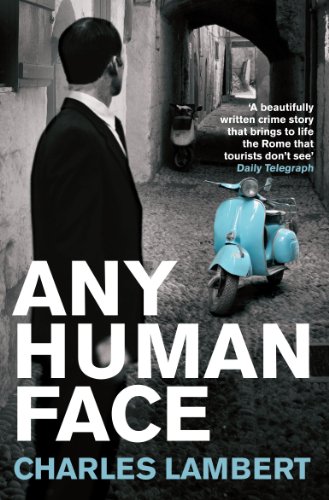
Any Human Face by Charles Lambert is set in the bleaker backwaters of Rome, on the edges of the gay community, each chapter like a snapshot in black and white. The Leitmotiv throughout the novel is a collection of photographs of convicts, which passes from one hand to another and eventually ends up in the possession of Andrew Caruso, who runs a delapidated book shop La Piccola Libreria, in the city. Moving between the 1980s and 2008, the photographic quality of the chapters serves to highlight the intrinsic isolation of many of the colourful characters who breeze in and out of the storyline, all the while set against a lurking presence of menace. The storyline and characters sometimes have a Pasolini-like quality, which really anchors the novel in the Eternal City.

And from this book we discovered  the restaurant “L'obitorio" un classico di Trastevere which serves pizza "piu' buona di Roma” - Bruno and Alex drop in early on in the book. Has anyone been there, what did you think?


"Even today, after two years of Roman vacations, I get lost in the center of the city as soon as I leave the perpendicular line of the Corso. For someone accustomed to the perfect symmetry of Manhattan, the twisting streets of the Italian capital seem a labyrinth of squares and narrow alleys, all the same: a fountain, a column, a flaking wall, a café, a market stall, a wild dog, a motorcycle, a beggar, a group of American or Japanese tourists, another fountain" (extract from Roman Holidays, Rome Noir short story, by Enrico Franceschini).

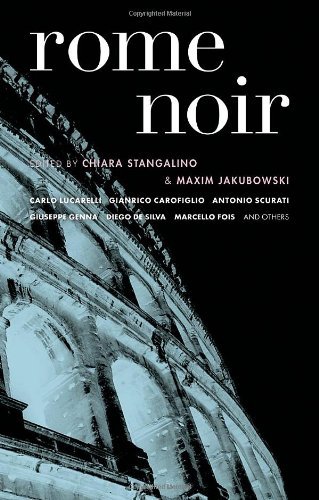
Recognise Rome from this short description? The lovely indecipherable impenetrable city with a history going back two and a half thousand years; and this is just one of many descriptions that pepper the book of short stories Rome Noir edited by Chiara Stangalino and Maxim Jakubowski. A cocktail of 16 stories set around the capital from Stazione Termini to the Via Appia Antica, Fiumicino to the Villa Borghese. Some stories are like gossamer veils enveloping and captivating, some are downright dark, and others culminate in murderous intent. Others are visceral in their storyline, some are seamy, but there is something for everyone. Tour the city through this collection and get to know areas off the beaten tourist track and experience the stories through the eyes of its citizens.

Share your choice of Rome set noir novels with us below in the Comments Box - novels that bring a place to life  (oh, and any suggestions for any good, out-of-the-way eateries?).


Saturday, 2 February 2013

Our selected books to take to INDIA

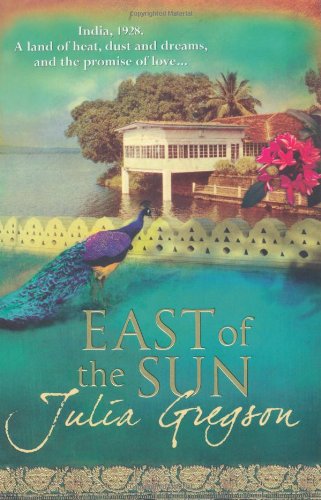
Where to start when one suggests fiction that brings India to life? There are so many novels out there where the heat, the smells, the life and the colour of the country really lift off the pages. One novel that recently crossed our path is East of the Sun by Julia Gregson, set in the late 1920s and just so evocative of the era and country. Unmarried young women on the search for husbands travelled to India in search of eligible young men based over there - the constant stream of women heading out East was charmingly called "The Fishing Fleet". Rose, arriving in Bombay describes her first impressions: "...there was too much to take in: the dazzling sun, the stink of drains and incense, the brilliant saris and dark faces." And there is more where that came from.... And what a beautifully designed cover!


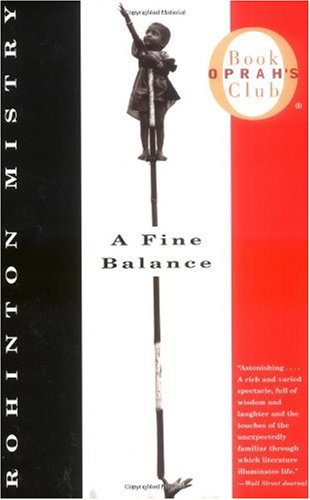
Our next choice is A Fine Balance by Rohinton Mistry. Compassionate realism and narrative are vividly captured in this masterpiece. It is 1975 and India is again in a state of flux, the location is an unnamed city by the sea (but it might well be Mumbai). A state of emergency has just been declared and, again, the lives of three characters are thrown together – a spirited widow, and two tailors from a hill station – living in a tiny apartment with an uncertain future.


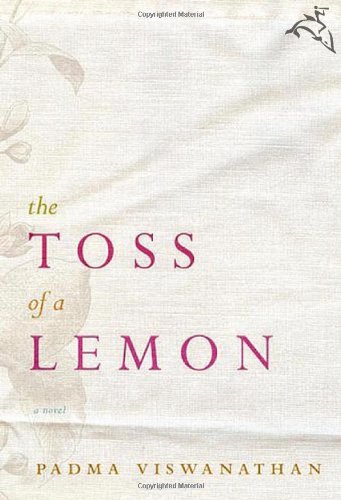
The Toss of a Lemon by Padma Viswanathan spans the lifetime of one woman (1896-1962), and brings us intimately into a Brahmin household, into an India we've never before seen. Married at ten, widowed at eighteen, left with two children, Sivakami must wear widow's whites, shave her head, and touch no one from dawn to dusk. She is not allowed to remarry, and in the next sixty years she ventures outside her family compound only three times.


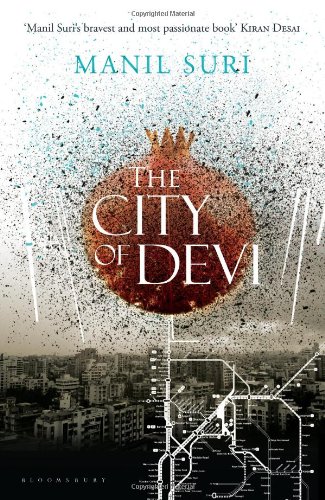
City of Devi by Manil Suri - Armed only with a pomegranate, Sarita ventures into the empty streets of Mumbai, on the eve of its threatened nuclear annihilation. She is looking for her physicist husband Karun, who has been missing for over a fortnight. She is soon joined on her quest by Jaz - cocky, handsome, Muslim, gay, and in search of his own lover. Together they traverse the surreal landscape of a dystopia rife with absurdity, and are inexorably drawn to the patron goddess Devi ma, the supposed saviour of the city. Groundbreaking and multilayered, The City of Devi is a fearlessly provocative tale of three individuals balancing on the sharp edge of fate.


Please add any novels in the Comments Box below which you would take to India with you and are really evocative of the location. Would you add Shantaram by Gregory David Roberts, or perhaps Behind the Beautiful Forevers by Katherine Boo.... or These Foolish Things by Deborah Moggach (the book behind the film The Best Exotic Marigold Hotel)? Help to make www.TripFiction.com a really valuable resource for both actual and armchair travellers by adding your suggestions and your spontaneous review.